Japan Travel Advisor Headline Animator

Showing posts with label japan. Show all posts

Monday, June 6, 2011

Obon

toro,nagashi,japanese,floating,lanterns,obon,bon,festival

The July darkness is heavy and humid, the scent of sun-baked grass, smoke, and river-water threading through trees and silent people. Festival drums, muted by distance, beat faster and more joyfully than the hearts of those ankle-deep in silt, knee-deep in night-black water.

Lamps, warm and white-gold, slide away from outstretched arms, gently bumping their way down a glassy ribbon of water. One-by-one they glide and turn, flame-brightened paper gradually yielding to the river, succumbing with a wisp of smoke, as fleeting as memory. They are a fairy-train, slowly vanishing into the darkness; the stars of the Milky Way gradually winking out; fireflies disappearing with the encroaching autumn. They are spirits - returning to the world of the dead.

Those left on the river-banks gaze out after the illuminations, secretly hoping their own will burn longest, disappear last. As some glowing flames gutter and acquiesce to the embrace of the river, their watchers slip away from the bank. Others remain until the last light gutters, imagine the hiss of the ignited wick meeting water and the disintegration of the taut rice-paper.

It is Toyo Nagashi, the penultimate celebration of Obon.

Recently, I have been thinking a lot about the Obon celebration, which takes place every year in the middle of July. It is a Buddhist festival honoring the spirits of the dead and, similar to South America’s Dia de los Muertos, it is a time for family and friends of the departed to gather and honor their ancestors by cleaning the family grave, giving offerings of food and prayer, and celebrating with song, dance, and carnival-like festivities.

A few weeks ago, I learned that my friend Momoko passed away in a car accident. Since I was in America and she in Japan, I was not able to attend her funeral, and though I plan to visit her grave the next time I go to Japan, I want to honor her in any way I can. This July, JTA is heading to a Bon Odori festival in our state, and I thought I would use this opportunity to explain a bit about some of the beautiful cultural rituals associated with Obon.

The origin of Obon surrounds the plight of a Buddhist disciple, who peered into the spirit-world and found his mother’s soul suffering in the realm of the hungry spirits. Following the advice of Buddha, the disciple left an offering for the Buddhist monks on the fifteenth day of the seventh month, and they saw the release of his mother’s spirit. Upon reflection of his mother’s kindness, and out of joy for her spirit’s release, he began to dance. This dance is the origin of Bon Odori, the traditional dance performed at the Obon festival.
Bon Odori comes in many styles depending on the region. A few examples include the fishermen’s dance to Hokkaido’s popular song “Soran Bushi” (featured in San Nen B Gumi Kinpachi Sensei 5-7) and Shikoku’s famous “Awa Odori” or, “Fool’s Dance” (below).


Other iconic celebrations, including Kyoto’s Daimonji bonfire, which takes the shape of “Dai/Oh” (the Chinese character for “big”) and lives up to that name by taking up a large part of a highly-visible Kyoto mountainside. Even in the spring and winter, the mountain wears the scar of this annual ritual and has been an attraction for tourists Japanese and foreign alike.

Picture courtesy Kyoto Shimbun

However, the most easily-recognizable ritual for consumers of Japanese media is probably Toro Nagashi. Family and friends of the departed place a candle inside a paper lantern and float them down a river. Always performed at night, this is usually the penultimate moment of the ceremony, and symbolizes the spirits’ journeys back to the world of the dead. As the vessel sinks and the light is extinguished, the soul is said to return to the spirit-world.

When I attend the Bon Odori festival this year, I will be thinking of Momoko, and if there is no Toro Nagashi at the Bon Odori festival, perhaps a few of my friends and I will do one of our own.

What other cultures have traditions like Obon and Dia de los Muertos? What are some more traditions associated with Obon? In what ways do people all over the world honor their passed friends and family? What other Japanese festivals are you interested in attending?


Opening photo by NakeBenihime.

Friday, May 13, 2011

Ten Tips for Clubbing in Tokyo


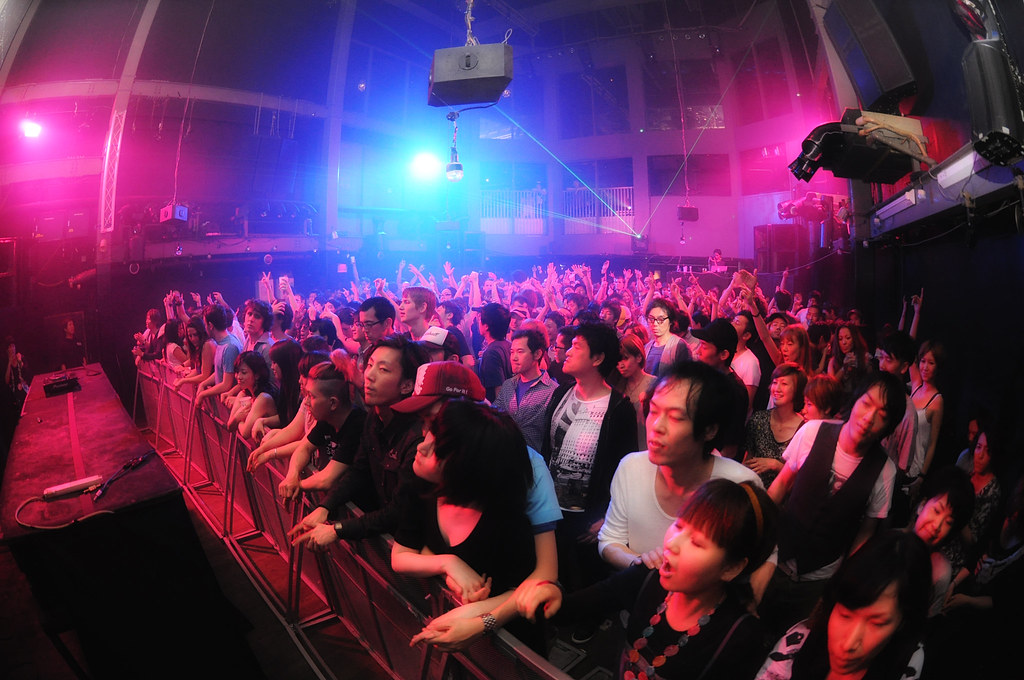
Live Music at WOMB in Shibuya. Photo by Dat (flickr)
Whether you’re heading for clubs in foreigner-friendly Roppongi, fashionable Shibuya, trendy Azabujuban, or classy Omotesando, there are a couple things you ought to know before hitting the dance-floors of Tokyo. I've grilled a bunch of my Tokyo friends about their top tips about clubs in Japan, and added a couple things I found useful. Some of these might surprise you...

Ladies, listen up; the first two are for you. Guys can skip to #3 unless you're planning to wear high-heels. Hey, we don't judge, and you can totally rock the block in Shinjuku Ni-chome.

1. Wear closed-toed shoes: Even if you just spent fifty bucks on a pair of strappy wedges, it’s not a good idea to wear anything with an open toe. Some clubs are super-crowded (see pictures above and right), and after paying the cover-charge, you don't want to skip out because you get stepped on. Try a pair of cute pumps or knee-high boots to complement your style.
2. Bring flats: Most clubs are at least a block from the nearest train or metro station. There's nothing worse than having to limp your way to the first train because you've been dancing all night and there was nowhere to sit. Slide a pair of ballet flats or flip-flops into a tote and check it at the door – you’ll thank yourself at 5AM. (I usually wore my flats to the club entrance, then swapped into heels, cause I’m classy.)


3.Cover charges: Clubbing in Japan can be a little steep, so be prepared to pay a cover charge. Ladies usually pay between 2000-3000 Yen (except on ladies' night), guys between 3000-5000 Yen. Sorry, guys. Usually, this comes with two drink tickets/coins, but you’ll probably want more, so…

4. Bring extra cash: Most places in Japan work on a cash-only basis, especially clubs. Don't expect to be able to use a credit card to pay your way in. Also, while some clubs provide coins or tickets, anything extra often has to be paid for in cash or by purchasing more coins/tickets.

5. Go on an off-day: possibly boring, but the perfect opportunity to make friends with the staff. Sometimes you can get discounts, free drinks, and introductions to cool people.

6.Once you're out, you're out: last trains are often around midnight, and most clubs don't get going until between midnight and one. Once you go out, you'll want to stay out all night unless your hotel is close enough to take a taxi.

7. For those who stay late: clubs usually wind down between 5 and 6, but sometimes you can hang out and eat post-club ramen with your new friends. After 7AM, there's no night charge on taxis, so splitting a cab back home might be a great option at this time of night.

8. Drink the yellow-stuff: Before you go into the club, drink Ukon no Chikara. It's a turmeric-infused energy drink in a tiny gold bottle. Turmeric is known for its ability to absorb alcohol, and keep you from having a hangover the next day. This stuff is liquid magic.

9. Be prepared for smoking: Smoking is still legal inside of most buildings and clubs are no exception. If you are allergic to smoke then you might want to stick to larger, more open club.

10. Nomi-houdai! This means “all-you-can-drink” in Japanese. Some places offer these deals if you arrive before a certain time. You can also pay a little extra at places like Karaoke, and certain private bars are “nomihoudai” only. Just spit out this phrase with a question mark at the end, and the staff will tell you if they've got it.

And now a word from our gurus:


Gender Inequality

Japan favors men in just about every way: higher salaries, more job opportunities, more social freedom, and all the other “usual suspects”. The one scene where guys get the short straw is clubs and bars.

Raven Wei puts it best: “If you're a lady, research which clubs have ‘ladies night’ and things of that nature. You can save major money that way. Not to mention, places like Club Ai do things like ‘if you wear pink every third Friday, cover charge is free’. On the flip side, if you're a dude, just prepare to be screwed. You'll get charged for everything EVERY night.”

In addition, the cover charge at bars and clubs is usually 1000~2000 yen higher than their female friends. Sorry guys. I guess it’s cause you get higher salaries.

How to Get a Stronger Drink


A lot of clubs serve their liquor a little on the light side, especially the clubs with nomihoudai, but if you like your drink to bite back just tell the bartender "tsuyoi me" (strong-ish). If it's still not strong enough? Try "motto tsuyoi" (stronger).


Shabz Cho has a suggestion for finding the clubs that aren't so stingy with their mixed drinks: 


"My rule of thumb: always ask for the "susume" (recommendation) from the bar dude first. If it ain't liquored up enough, chances are I won't be coming back."


That’s no moon…it’s a Host-Club!

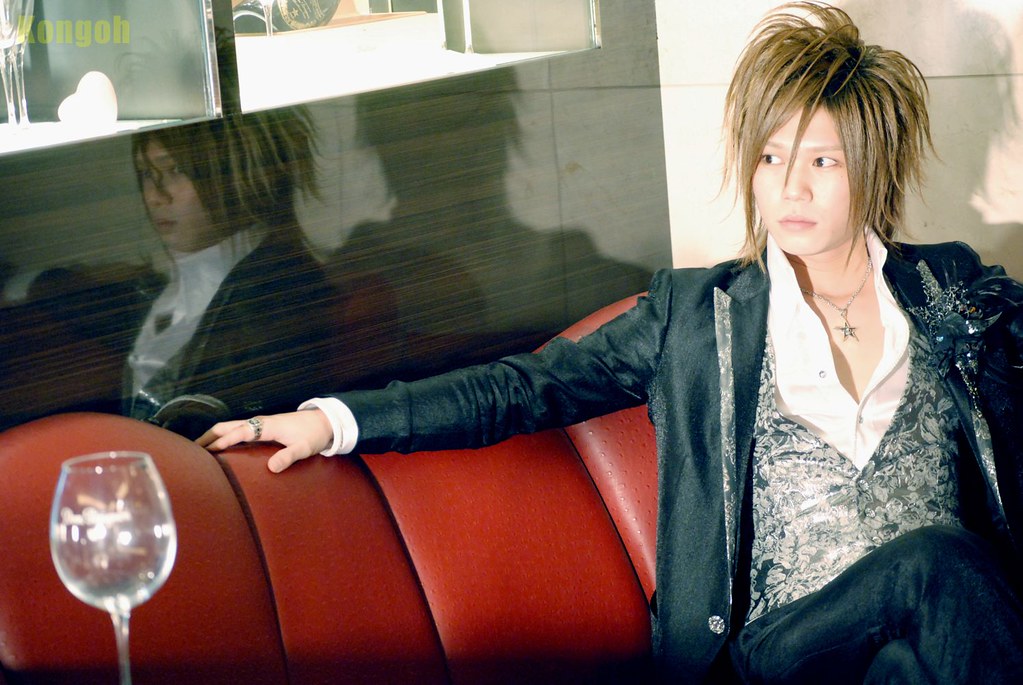
A typical Host. (Image by Kongoh from flickr)
You know what’s awkward? No, it’s not Kamenashi Kazuya’s drama ratings (ouch!), but that’s a good guess. Getting persuaded to go to a club, and then realizing you and your friends are standing in the entrance of a Host Club with all the blinged-out dudes in shoes that would make Liberace swoon, and enough hairspray to keep them burning for seven days and seven nights – that’s awkward.

Luckily, I watched enough Japanese dramas that I never had this problem, but I've known a few folks who have. 

Seriously, y'all: MISSION ABORT.

If you're not sure what a Host(ess) club is, check out this Wiki article on the subject

Generally the Host(ess) Clubs that allow foreigners aren’t dangerous, and can be fun for a laugh on an off-night. Just avoid holding a match near anyone’s head.


How Can You Tell? 

Some places like Roppongi or Shinjuku might seem a little sleazy with all the hawkers trying to get you to come to their clubs. How can you tell if it’s a host-club? If they hand you a menu-like flyer with pictures of staff members, you can be pretty confident it’s not a place where you can dance to the latest hit from Big Bang. Also, Host(ess) Clubs tend to have names like "Club Ren" or "Club Keiko", and the hawkers usually wear black suits, silver jewelry, ridiculous shoes, and hair to rival a Super Saiyan ------->


Not even joking.


INTERACT: Tell me about your clubbing experiences in Japan! Are there any tips you find useful? Do you have a club you'd like to recommend? Do you have a fun/funny/awkward story about clubbing in Japan? Leave a comment!

Monday, March 7, 2011

Going to Asia? - Asia in the News

Photo courtesy Springben's photostream
Lauren here, to bring you a few updates from around the internet.

Looking for Photography? Check out "Toshio"'s Flickr photostream, including This Gorgeous Picture of a Japanese Torii. Or how about the Harbin Snow Festival in China?

Eating Vegan in Japan!
If you've not heard, Tokyo has recently outstripped Paris as a food capital of the world, but it can be tough get a vegetarian/vegan meal outside Godzilla's stomping ground. If you haven't been to Japan, you probably find it surprising that such a health-conscious culture doesn't have many vegetarian options. The truth is, meat is present in just about every meal in some way or another, so it could be a challenge for a vegetarian to visit or live in Japan, particularly for someone who doesn't know the language. Vegan is almost impossible. However, one culinary-minded foreigner committed to helping her vegan friends find sustenance in the home of yaki-tori and sushi.

"Tomodachi of a Vegan" is a blog that features almost daily vegan recipes that visitors and residents in Japan can follow to feed themselves, even in rural areas. The most recent post: Hot-Pockets for Dinner looks absolutely delicious. The great part is, most of these recipes can be modified to include meat for us carnivores.

Blog Articles

The Good
Coming Face to Face with History in Hiroshima, Japan in this Gadling.com article, writer Erin de Santiago talks about her decision to visit Hiroshima, Japan, and the impact of history on her present-day travel experience. A brief, moving article.

Siem Reap: 3 Days in Cambodia Gadling.com travel journalist, Justin Delany is back again, this time giving us the low-down on exactly how to spend three days in Cambodia. If you didn't want to go before reading this article, you will once you're done. ATV's, natural temples, and a 3$ foot-massage? Yes, please.

China Flights to Hawaii Despite worries about the complex visa process, the sell-out flights from China to Honolulu indicate success for this new direct flight venture.

The Bad
Vietnam Authorities Suspend Tour Company  A tour company responsible for the deaths of 12 tourists, who died after the ship they were sleeping on sank last month, is now suspended by Vietnamese authorities. Click the link to read more.

The Ugly
North Korea Resumes Construction of World's Most Hideous Hotel again, via Gadling.com, writer Justin Delaney expounds upon NK's decision to resume construction of a hotel begun in the 1980's...which Delaney estimates will cost roughly 5-10% of North Korea's GDP. You have to wonder if Kim Jong Il is expecting travel to increase...

Keep checking back for more news, and some guest blogs by travelers around the world!