Japan Travel Advisor Headline Animator

Showing posts with label tips. Show all posts

Friday, May 13, 2011

Ten Tips for Clubbing in Tokyo


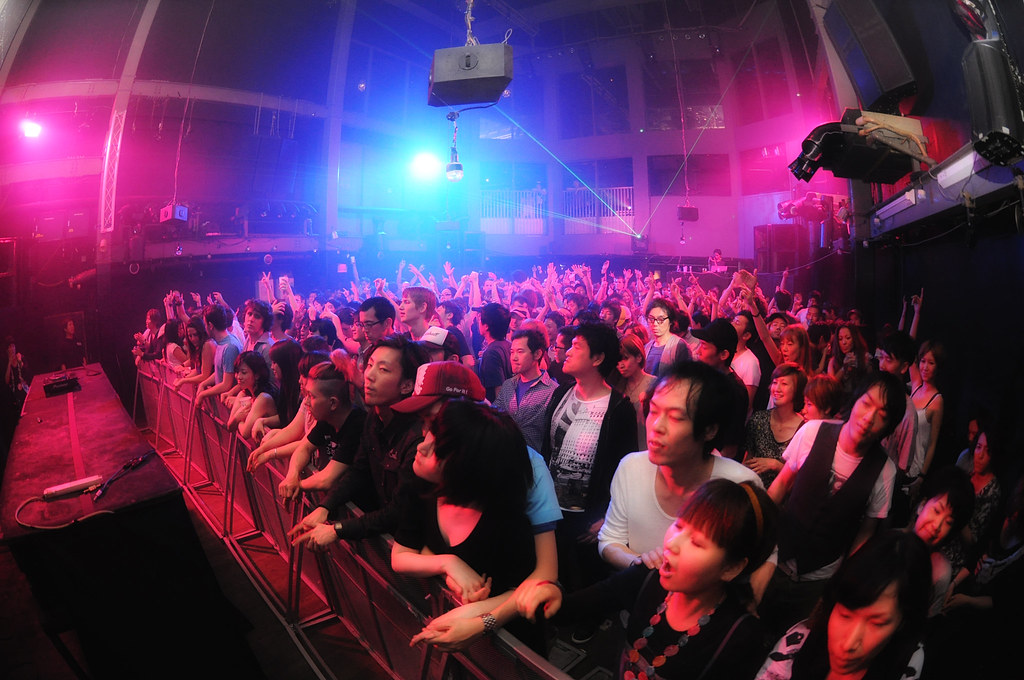
Live Music at WOMB in Shibuya. Photo by Dat (flickr)
Whether you’re heading for clubs in foreigner-friendly Roppongi, fashionable Shibuya, trendy Azabujuban, or classy Omotesando, there are a couple things you ought to know before hitting the dance-floors of Tokyo. I've grilled a bunch of my Tokyo friends about their top tips about clubs in Japan, and added a couple things I found useful. Some of these might surprise you...

Ladies, listen up; the first two are for you. Guys can skip to #3 unless you're planning to wear high-heels. Hey, we don't judge, and you can totally rock the block in Shinjuku Ni-chome.

1. Wear closed-toed shoes: Even if you just spent fifty bucks on a pair of strappy wedges, it’s not a good idea to wear anything with an open toe. Some clubs are super-crowded (see pictures above and right), and after paying the cover-charge, you don't want to skip out because you get stepped on. Try a pair of cute pumps or knee-high boots to complement your style.
2. Bring flats: Most clubs are at least a block from the nearest train or metro station. There's nothing worse than having to limp your way to the first train because you've been dancing all night and there was nowhere to sit. Slide a pair of ballet flats or flip-flops into a tote and check it at the door – you’ll thank yourself at 5AM. (I usually wore my flats to the club entrance, then swapped into heels, cause I’m classy.)


3.Cover charges: Clubbing in Japan can be a little steep, so be prepared to pay a cover charge. Ladies usually pay between 2000-3000 Yen (except on ladies' night), guys between 3000-5000 Yen. Sorry, guys. Usually, this comes with two drink tickets/coins, but you’ll probably want more, so…

4. Bring extra cash: Most places in Japan work on a cash-only basis, especially clubs. Don't expect to be able to use a credit card to pay your way in. Also, while some clubs provide coins or tickets, anything extra often has to be paid for in cash or by purchasing more coins/tickets.

5. Go on an off-day: possibly boring, but the perfect opportunity to make friends with the staff. Sometimes you can get discounts, free drinks, and introductions to cool people.

6.Once you're out, you're out: last trains are often around midnight, and most clubs don't get going until between midnight and one. Once you go out, you'll want to stay out all night unless your hotel is close enough to take a taxi.

7. For those who stay late: clubs usually wind down between 5 and 6, but sometimes you can hang out and eat post-club ramen with your new friends. After 7AM, there's no night charge on taxis, so splitting a cab back home might be a great option at this time of night.

8. Drink the yellow-stuff: Before you go into the club, drink Ukon no Chikara. It's a turmeric-infused energy drink in a tiny gold bottle. Turmeric is known for its ability to absorb alcohol, and keep you from having a hangover the next day. This stuff is liquid magic.

9. Be prepared for smoking: Smoking is still legal inside of most buildings and clubs are no exception. If you are allergic to smoke then you might want to stick to larger, more open club.

10. Nomi-houdai! This means “all-you-can-drink” in Japanese. Some places offer these deals if you arrive before a certain time. You can also pay a little extra at places like Karaoke, and certain private bars are “nomihoudai” only. Just spit out this phrase with a question mark at the end, and the staff will tell you if they've got it.

And now a word from our gurus:


Gender Inequality

Japan favors men in just about every way: higher salaries, more job opportunities, more social freedom, and all the other “usual suspects”. The one scene where guys get the short straw is clubs and bars.

Raven Wei puts it best: “If you're a lady, research which clubs have ‘ladies night’ and things of that nature. You can save major money that way. Not to mention, places like Club Ai do things like ‘if you wear pink every third Friday, cover charge is free’. On the flip side, if you're a dude, just prepare to be screwed. You'll get charged for everything EVERY night.”

In addition, the cover charge at bars and clubs is usually 1000~2000 yen higher than their female friends. Sorry guys. I guess it’s cause you get higher salaries.

How to Get a Stronger Drink


A lot of clubs serve their liquor a little on the light side, especially the clubs with nomihoudai, but if you like your drink to bite back just tell the bartender "tsuyoi me" (strong-ish). If it's still not strong enough? Try "motto tsuyoi" (stronger).


Shabz Cho has a suggestion for finding the clubs that aren't so stingy with their mixed drinks: 


"My rule of thumb: always ask for the "susume" (recommendation) from the bar dude first. If it ain't liquored up enough, chances are I won't be coming back."


That’s no moon…it’s a Host-Club!

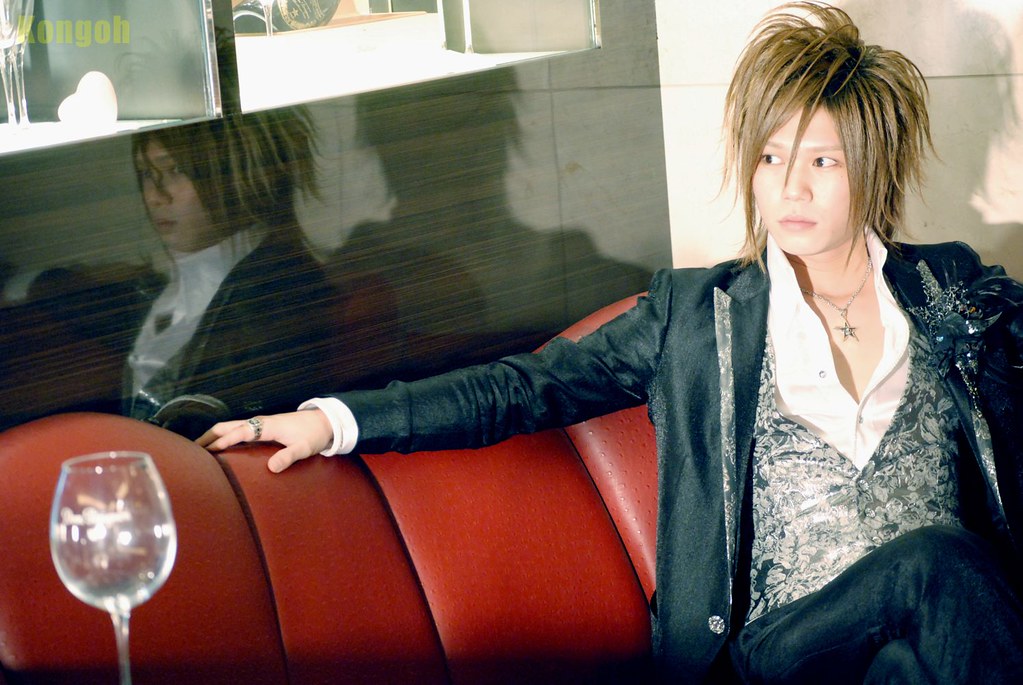
A typical Host. (Image by Kongoh from flickr)
You know what’s awkward? No, it’s not Kamenashi Kazuya’s drama ratings (ouch!), but that’s a good guess. Getting persuaded to go to a club, and then realizing you and your friends are standing in the entrance of a Host Club with all the blinged-out dudes in shoes that would make Liberace swoon, and enough hairspray to keep them burning for seven days and seven nights – that’s awkward.

Luckily, I watched enough Japanese dramas that I never had this problem, but I've known a few folks who have. 

Seriously, y'all: MISSION ABORT.

If you're not sure what a Host(ess) club is, check out this Wiki article on the subject

Generally the Host(ess) Clubs that allow foreigners aren’t dangerous, and can be fun for a laugh on an off-night. Just avoid holding a match near anyone’s head.


How Can You Tell? 

Some places like Roppongi or Shinjuku might seem a little sleazy with all the hawkers trying to get you to come to their clubs. How can you tell if it’s a host-club? If they hand you a menu-like flyer with pictures of staff members, you can be pretty confident it’s not a place where you can dance to the latest hit from Big Bang. Also, Host(ess) Clubs tend to have names like "Club Ren" or "Club Keiko", and the hawkers usually wear black suits, silver jewelry, ridiculous shoes, and hair to rival a Super Saiyan ------->


Not even joking.


INTERACT: Tell me about your clubbing experiences in Japan! Are there any tips you find useful? Do you have a club you'd like to recommend? Do you have a fun/funny/awkward story about clubbing in Japan? Leave a comment!

Thursday, May 5, 2011

Funk Fujiyama!

So, I received an email the other day asking me about the Japanese song I use in the J-TAC podcast. It's called "FUNK FUJIYAMA", and it's by the popular 1980's Japanese funk/pop band Kome Kome Club. FUNK FUJIYAMA lampoons foreigners' stereotypes of and behavior in Japan. The chorus, which seems to be listing the most common Japanese words foreigners seem to know, illustrates this quite well:

Everybody samurai, sushi, geisha.
Beautiful Fujiyama, ha ha ha!
Konnichiwa, sayonara, kore ikura?
Beautiful Fujiyama, ha ha ha!

(*Note: Fujiyama = Mt. Fuji)

Somehow by the wonders of YouTube, I have managed to scrounge up the 80s-tastic music video to FUNK FUJIYAMA. Watch, be confused, and enjoy!


While we're on the subject of "beautiful Fujiyama", I have a confession to make: in all the three years I lived in Japan, I never went to Mt. Fuji. I always had an excuse, I always thought I would have time, but by the time I  realized I was headed home, I'd lost my chance. Well, that's not going to happen again. I'm trying to make it back to Japan this fall, and when I do, I'm going to conquer Fujiyama (ha ha ha)!

Now for the travel-agenty stuff:

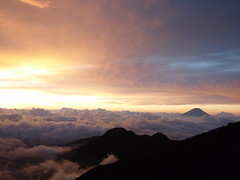
Photo by Miurasat
If you're interested in climbing Mt. Fuji over the summer, consider booking a tour before you go. If you don't speak much Japanese, or you don't have anyone to go with you, it can be a little tough to do it on your own. There's actually a summer special Sunrise Tour called "Challenge! Mt. Fuji 2-Day Climbing Tour" going on for $360 (adults, kids are $348) where you get to climb Mt. Fuji and watch the sun rise from the top. Obviously, you'd be climbing at night, so I'd recommend this tour pretty soon after your arrival in Japan. Might as well take advantage of jet-lag, huh? Or, if you're planning to go clubbing or party late into the night, maybe it won't interfere with your schedule at all. If I were going back this summer, I would totally do it. I wonder if it extends into the fall...

Anyway, this tour is cool because you get to climb Mt. Fuji with two guides: a Japanese-speaking walking guide an English-speaking guide to translate and tell you all the relevant history. Your breakfast, dinner, shuttle bus, and sleeping place are covered in the cost of the tour. Be warned, though: there's no vegetarian option for the meals, so if you're vegetarian, you've got to bring your own food. It can be tough to be a vegetarian in Japan, but I'd recommend checking out the blog Tomodachi of a Vegan before you head out.

If you're not into hiking, check out the other Sunrise Tours. Personally, I like the historical ones, but there's something for everyone, and they range from half-day to 14-day, full-out packages. Here's a link to the Sunrise Tours Digital Brochure.

If you want to know more about rates and tickets, or get an estimate on how much it would cost you, shoot me an email: Lauren@japantravel.com

Wednesday, March 2, 2011

Tokyo Travel Spot: Shimokitazawa (下北沢)Part I

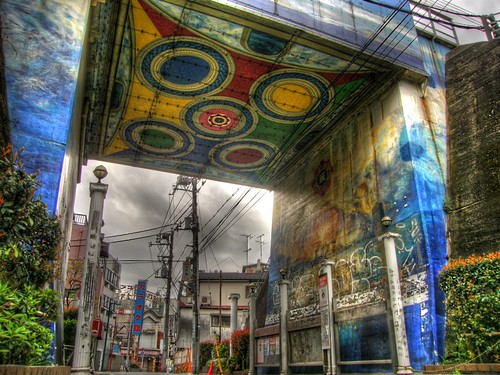
(Photos courtesy Guwashi999 's Flickr Photostream)


Bridge Art on the South Side of the Station, next to
The Honda Gekkijou (The Honda Theater)
When I was in Japan, I fell in love with a town called Shimokitazawa (下北沢). At the crossing of the Odakyu and Keio-Inogashira lines, it's about five minutes from Shibuya and ten from Shinjuku, and is one of the most popular places to shop with the young indie crowd. 


It's easy to see why people love Shimokitazawa--by day, it's streets are packed with shops whose merchandise spill out of open-faced shops, cafes and coffeeshops boasting an array of gastronomic delights for even the most discerning of java junkies, and throngs of young Japanese shoppers at their bohemian best. Fashion hits Shimokitazawa at a somewhat sideways angle, leaving it with a concentrated sampling of the trendy, the bag-lady, and the downright weird. 


Why Shimokita?

South Side storefronts at night.
Shimokitazawa is a tiny art town dropped in the middle of big-city Tokyo, and like many art towns, feels simultaneously very new and very old. Young people flock to Shimokita to catch shows at one of its many live-houses, search out rare records at any number of retro music shops, or dig through the trendy clothing stores. You won't see any gray walls in Shimokita, either--after closing time, storefronts roll down garage doors, and while most of Japan has to look at bland neutrals, every storefront, garage door, and retaining wall in Shimokita is decorated with hand-painted graffiti.


North Side of the Station
A short trip from the North side of the station, however, reveals an old shrine, which houses an enormous Tengu mask--rolled out every year at Setsubun for the Tengu Matsuri. Any number of older ladies dressed in traditional kimonos haggle with the produce vendors, tucked away under the corrugated tin roof of the market next to the station. 


South Side of the Station

Manga Man!
The South side is most popular with the young crowd. Here you'll find clothing stores, arcades, karaoke-kan, bakeries, and restaurants. At any time of day, amateur musicians and artists set up shop under the railroad tracks or on the grimy sidewalks. If you see the "Manga Man", toss a coin in his collection tin, and he'll do a dramatic reading from any one of his hundred manga. 


Once, I watched a man in a skin-tight spandex bodysuit draped in rainbow-colored Christmas lights, clutching a guitar. He banged out an original song that translates roughly to "STFU, blockhead!" Not too long after, I sat down with a pair of young Japanese men who spent their free-time hand-grinding coffee, which they percolated over a palm-sized gas stove and served to me out of a paper cup. Apparently, one of them had backpacked across Okinawa, trading coffee for food and supplies. That's hardcore.


There's a lot to see in Shimokitazawa on both sides of the tracks, but today I'm just going to focus on some of my favorite spots on the North Side of the station. Keep your eyes open for the continuation, including the South side of the tracks.


THE NORTH SIDE OF THE STATION


This is where you'll find the coffeeshops, the tiny French or Italian restaurants, and the quirky antique stores. Browse around, and make sure you're looking for the coffee shops...above street level. Spot the Kanji 加非, or the hiragana コーヒー and you're golden...it means coffee! Like anywhere in Japan, shopping is a matter of not just looking around...but looking up. Here are some of my favorite restaurants and stores:


The Indian Restaurant


In America, I probably wouldn't have set foot in this place. It's got the appearance of a shabby dive-bar, and the concrete floor wouldn't look out of place in a prison cell. The once-cheery rose-tinted paint, and the clutter of brightly-colored Idol pictures are grease-stained, and...was that a roach? If you get bothered by little things like appearance in Shimokitazawa, you'll miss out on the best places you could eat.


Leave through the North exit and turn right; you'll see what appears to be a shanty-town or market stalls underneath a corrugated tin roof. It's dark, it looks dingy and when you step out of the bright sunlight, it takes a moment for your eyes to adjust to the darkness. The temperature drops by several degrees, like you're entering a cave. Nervous? Don't be. You don't want to miss what's inside. 


Pass the Yakitori place on the right, and take a left at the vegetable seller, Mr. Tanaka, and find the bright yellow storefront with red-and-white checkered tables. This is some of the best Indian food you will ever eat. The Indian owners speak English and Japanese, and cook everything right there in front of you on a gas stove. Watch in amazement as they stretch nan dough over a padded disc and slam it into the tandoori oven, only to bring it out--piping-hot and mouthwatering--a minute later. I learned to make some of the best spicy cucumber salad I have ever eaten just by watching the couple of ingredients.


Make sure you don't eat and run, though, or you could miss out on the complimentary chai latte, served to you in a little tin cup. Get to know the owner of this place a little, and he'll say hello to you every day for the rest of your life.


If you're in the mood for dessert, hop back out onto the street and walk to where the road tees at a huge cherry-blossom tree. Turn left and you'll soon find:


I walked by this place every day on the way to work. Not only were the gelatin and ice-cream hand-made, but the staff was extremely friendly. 


My friends and I thought the place was a little sketchy at first, because of all the mushroom paraphernalia, but the staff greeted me every morning as I walked by, so I eventually got brave enough to ask about the mushrooms.
"Oh," said the staff member. "We use them because Tengu eat mushrooms."
If you like soy, I highly recommend their "Tonyuu" flavored ice-cream, but if it's winter, be sure not to miss their hot custard! It's the best I've had anywhere, and they'll give you a small cup of hot chocolate on the house.
Sunday Brunch


Picture Courtesy www.bento.com
On the North side of the station, down where the coffee-shops and boutiques cram themselves on streets too narrow for taxies, is a spacious place to eat. Aptly named "Sunday Brunch", this place serves western fare like avocado and shrimp salad, or various types of breakfast foods. The place has an airy, industrial feel, with pressed tin and clustered lights on the ceiling, and enough windows to make it feel almost like you're eating outside.


My number one recommendation is the French Toast. It's made with a baguette, and served with fresh cream, syrup, and powdered sugar. It's the best French toast you'll ever eat. I promise. Also, check out the gift shop, where you can find cute stickers and fun stationary...because you'll want to write home about it.


Day's has flowers, clothes, and stationary. Best yet? It's right
across from Sunday Brunch! Picture courtesy akiba_gab
And of course, there are hundreds of coffeeshops on the south side of the station. To get to the real shopping streets, all you have to do is take a right out of the station, walk until you get to the first cross-road, and take a left. Pretty soon, you'll be right in the thick of things!